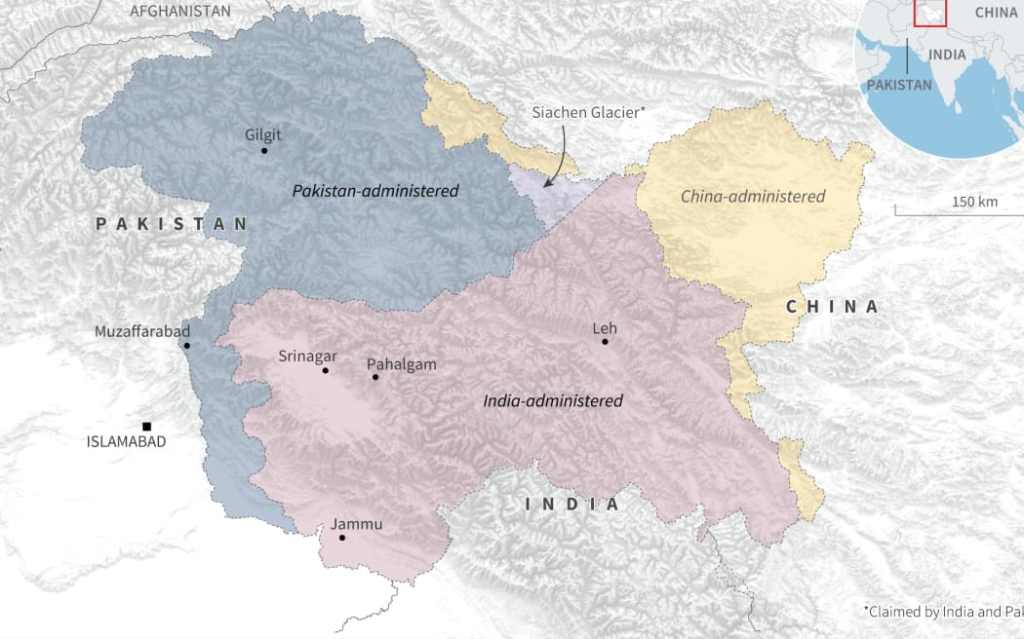
Kashmir is no longer sitting comfortably as a bilateral issue. It’s being pulled into global geopolitics.
- Is Another Terror Attack Coming to India ?
- and Is the Region Ready for What Follows?
- Why Pulwama, Pahalgam, and Operation Sindoor still matter today?
- What Is Really Happening Between India and Pakistan?
People are asking a simple question: if another terror attack comes in India or when It will happen or what will happen? The reason this question matters is because many things still remain unanswered. The operation Sindoor is not officially declared over, and New Delhi’s message is increasingly clear: India is moving toward a “new normal” of zero tolerance against terrorism. This is no longer about one off retaliation. It signals a shift toward sustained, pre-emptive action against terror infrastructure.This is not about revenge anymore. It is about deterrence sending a signal that future attacks will bring immediate consequences.
Pakistan’s Diplomatic Position
At the same time, Pakistan finds itself in a stronger diplomatic position than before. Pakistan’s participation in broader peace initiatives, including Trump’s Gaza peace efforts, has improved its standing in Washington. This gives Pakistan a rare opportunity to pause, reassess, and reduce escalation.Interestingly,
Donald Trump had already tweeted in September 2019 about mediating the Kashmir issue long before Operation Sindoor. At the time, Few didn’t notice pattern.
Today, with shifting alliances and rising instability, that idea no longer seems unrealistic. Trump’s long standing desire to broker high-profile peace deals may yet resurface.
New Defence Alignments Are Changing the Equation
On 17 September 2025, a defence pact was signed at Al-Yamamah Palace in Riyadh. It was signed by Saudi Crown Prince and Prime Minister Mohammed bin Salman and Pakistan. This shows Pakistan is getting closer to Saudi Arabia on defence and security matters.At the same time, Pakistan and Bangladesh are in advanced talks for a Mutual Defence Agreement. This is unusual. Bangladesh usually stays away from military alliances. This clearly shows Pakistan is trying to build strong regional defence partners.
Violence Beyond Kashmir Is Escalating
Meanwhile, violence continues elsewhere. On 1 February, terrorists in Pakistan’s troubled Balochistan province killed 33 people, including civilians. Security forces responded by killing 92 attackers. The Balochistan Liberation Army (BLA) claimed responsibility, and Pakistan accused India of backing the group. In retaliation, Pakistan claims it has killed 143 militants.
Whether these claims are accurate or exaggerated ,one thing is clear: the region is heating up on multiple fronts.
India, for now, appears diplomatically isolated. Its hard security posture does not come with strong international backing, unlike in previous crises. Pakistan, on the other hand, is managing to keep major powers engaged, especially the U.S.If another terror attack happens, the response will not be symbolic. It will be immediate and sustained. And that is what makes this moment dangerous but also decisive.South Asia is standing at a crossroads. What happens next will shape the region for years, not months.
My perspective is simple. Pakistan wants the Kashmir issue to become a global issue not just a bilateral dispute between India and Pakistan. By pushing for internationalisation, Islamabad aims to bring in influential actors like the United States and Saudi Arabia. If such powers become actively involved, Pakistan could gain diplomatic leverage and shift the narrative in its favour on the global stage.
From a professional standpoint, this strategy reflects a broader geopolitical calculation. Internationalising the issue increases visibility, invites external pressure on India, and reframes Kashmir within global discussions on human rights and self determination. However, success depends heavily on shifting global alliances and strategic interests.
India’s position has always been clear. India wants Kashmir to remain an internal issue. If there are talks, India believes they should happen only between two countries, not with outside involvement.On 19 January 2026, India sent a direct message. External Affairs Minister S. Jaishankar urged Poland to adopt a policy of zero tolerance toward terrorism. He also asked Poland to stop supporting or allowing any infrastructure that helps terrorism near India’s neighbourhood. This gives a indirect message to Poland to not interfere in this conflict as Kashmir is very sensitive for India.
Now the important question is: does the U.S. want Kashmir to become an international issue? The U.S. often talks about mediation during tensions. This helps Washington manage crises, but it also puts pressure on India.For Pakistan, international involvement helps balance India’s power. For India, it creates diplomatic pressure and limits its control over the issue.
Things are changing quickly. Defence deals, new alliances, and foreign involvement are slowly pushing Kashmir out of a bilateral space and into global politics.

Leave a comment