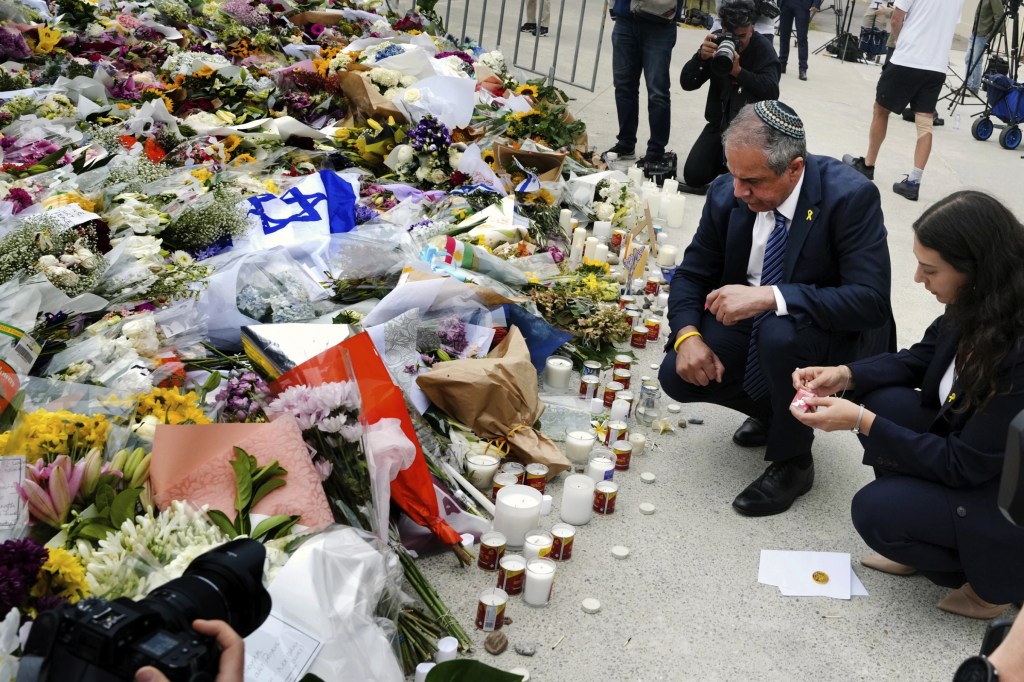
The mass shooting at a Hanukkah celebration near Bondi Beach on 14 December 2025 killed at least fifteen people, deliberately targeted the Jewish community in what is being treated as an antisemitic attack with possible terrorism links.
This was not a sudden or isolated incident.There was a clear pattern of escalation, one that intelligence and security agencies were already monitoring, even if it was difficult for the general public to recognise at the time.
What followed were early warning signs and behavioural indicators that, when viewed together, pointed toward a growing threat. Below is a timeline of the key indications that preceded the attack.
This attack followed a clear and escalating pattern of violence:
- 17 October 2024 – A Jewish-owned brewery in Melbourne is targeted in an arson attack.
- 20 October 2024 – A kosher delicatessen is attacked using similar methods, indicating an emerging pattern.
- 6 December 2024 – Masked offenders firebomb the Adass Israel Synagogue in Ripponlea during early morning hours.
- 21 January 2025 – A childcare centre less than 200 metres from Maroubra Synagogue is set alight and sprayed with antisemitic graffiti.
- 4 July 2025 – Another arson attack occurs on Shabbat, deepening community fears.
- 14 December 2025 – A Hanukkah celebration at Bondi Beach is attacked, resulting in fifteen deaths. NSW Police treat the incident as a targeted antisemitic act.
Despite the progression, intervention came late:
- 16 January 2025 – The Australian Federal Police make their first arrest under Operation Avalite, charging a man over online death threats.
- 19 January 2025 – New federal hate crime laws are announced.
The sequence of events shows a steady escalation from property damage to attacks on places of worship, then to facilities serving children, and finally to mass murder. The victims at Bondi Beach were Australian citizens targeted solely for their Jewish identity, with no connection to international politics.
Israeli Prime Minister Benjamin Netanyahu responded to the December 2024 synagogue attack, stating: “The burning of a synagogue in Australia is an abhorrent act. I expect the state authorities to use their full weight to prevent such antisemitic acts.” The Bondi Beach massacre eleven months later proved those warnings tragically prescient.

These incidents occurred as Australia’s government shifted its position on Palestinian statehood, with the Labour government adopting a more sympathetic stance towards Palestinian recognition. Over 140 countries recognise Palestine, including European nations with established Jewish communities that maintain relatively low antisemitic violence levels.
The critical distinction lies in implementation.
Australia’s approach lacked elements present in comparable countries:
- proactive consultation with Jewish community leaders, security assessments of vulnerable sites before policy announcements, and clear messaging distinguishing between criticism of Israeli government actions and antisemitism targeting Australian Jews.
European precedents demonstrate that recognising Palestine and protecting Jewish communities are not mutually exclusive. France recognises Palestine but struggles with antisemitic violence due to inadequate security measures. Britain has protocols for increasing synagogue protection during Middle East conflicts. Scandinavian countries combine Palestinian recognition with proactive interfaith programmes and consistent hate crime prosecution.
Australia assumed geographic distance from the Middle East provided insulation. This failed to account for social media’s role in collapsing distance, diaspora community connections to ancestral regions, and the speed at which international conflicts manifest domestically.
The fourteen-month timeline demonstrates catastrophic policy failures. Intelligence agencies either failed to identify the pattern or their assessments were not acted upon. Security resources were not reallocated after October 2024 incidents established clear threat patterns. Operation Avalite and hate crime laws came months after the violence began and proved insufficient to prevent the Bondi Beach massacre.
Foreign policy changes affecting contentious issues require domestic impact assessments and community consultation before announcement, not after violence occurs.
The fundamental question is whether Australia can maintain independent foreign policy while protecting all citizens regardless of religious background. The progression from arson to mass murder demonstrates that current approaches have failed catastrophically. Fifteen people are dead including a ten-year-old child and an eighty-seven-year-old elder because warnings were ignored and patterns were not stopped. The government’s responsibility was not to avoid foreign policy shifts but to ensure those shifts did not create permissive environments for domestic terrorism.

Leave a comment