“Missiles, Mediation, and Multipolarity: The New Face of Indo-Pak Tensions”
In late April 2025, South Asia was shaken by a deadly terror attack in Pahalgam, a scenic town in Indian-administered Kashmir. Armed militants open fire on tourist , killing 26 and wounding dozens more. India immediately blamed Pakistan for harboring the attackers, igniting one of the most dangerous flare-ups between the nuclear-armed neighbors in over two decades. Pakistan denied involvement, demanding a neutral investigation. What followed has drawn in global powers, tested old alliances, and revealed how much the Indo-Pakistani rivalry has become entangled in broader geopolitical contests.
From Rhetoric to Retaliation
India responded to the Pahalgam massacre with fury. Within a week, it launched “Operation Sindoor,” a coordinated missile strike targeting what it described as terror camps in Pakistani Punjab and Pakistan-administered Kashmir. Pakistan claimed 31 civilians were killed and called the attacks a violation of sovereignty. It retaliated with what it dubbed the “Bunyan-ul-Marsus” counterstrike, using drones and cruise missiles to target Indian military sites. India claimed most of these were intercepted. The Line of Control once again turned into a tense and militarized flashpoint, reminiscent of the 2019 Balakot airstrikes.
Diplomatic Dominos: The World Reacts
The United Nations quickly called for de-escalation, with Secretary-General Guterres urging both nations to avoid a military solution. The United States, traditionally closer to India in recent years, reached out to both governments. Secretary Marco Rubio personally urged restraint while reaffirming India’s right to defend itself against terrorism. The UK offered mediation. China, which has ties to both countries, expressed regret over the violence and emphasised dialogue, despite quietly shielding Pakistan in international forums.
Russia expressed deep concern but offered no formal mediation. Interestingly, as tensions spiked, Chinese President Xi Jinping stood alongside Vladimir Putin in Moscow’s Red Square during the Victory Day parade, sending a subtle message of Sino-Russian alignment amid global instability. While their focus was on Ukraine and mutual defense, the Kashmir crisis loomed large in diplomatic backchannels.
India’s Strategy: Backchannel Diplomacy and Avoiding U.S. Involvement
Right now, India is using backchannel diplomacy to deal with the escalating situation with Pakistan. This means that instead of having open talks with the public and the media, India is quietly negotiating behind the scenes, often through trusted intermediaries or unofficial channels. This allows them to manage tensions and explore solutions without making big public commitments.
One key thing India is avoiding is getting the U.S. involved in the conflict. Even though the U.S. has historically been an ally, India has been cautious about letting Washington take the lead this time. There’s a reason for this. The U.S. is often seen as having its own interests in the region, and India doesn’t want to risk its relationship with Pakistan or give the U.S. a bigger role in the conflict.
In fact, if you look at the recent comments from U.S. Vice President J.D. Vance, he’s made it clear that the U.S. isn’t planning to get involved. This could be seen as Vance trying to keep his reputation intact, as he doesn’t want to be seen as dragging the U.S. into another international conflict. By staying neutral, he’s trying to cover his own political standing, rather than taking any serious action to mediate or intervene.
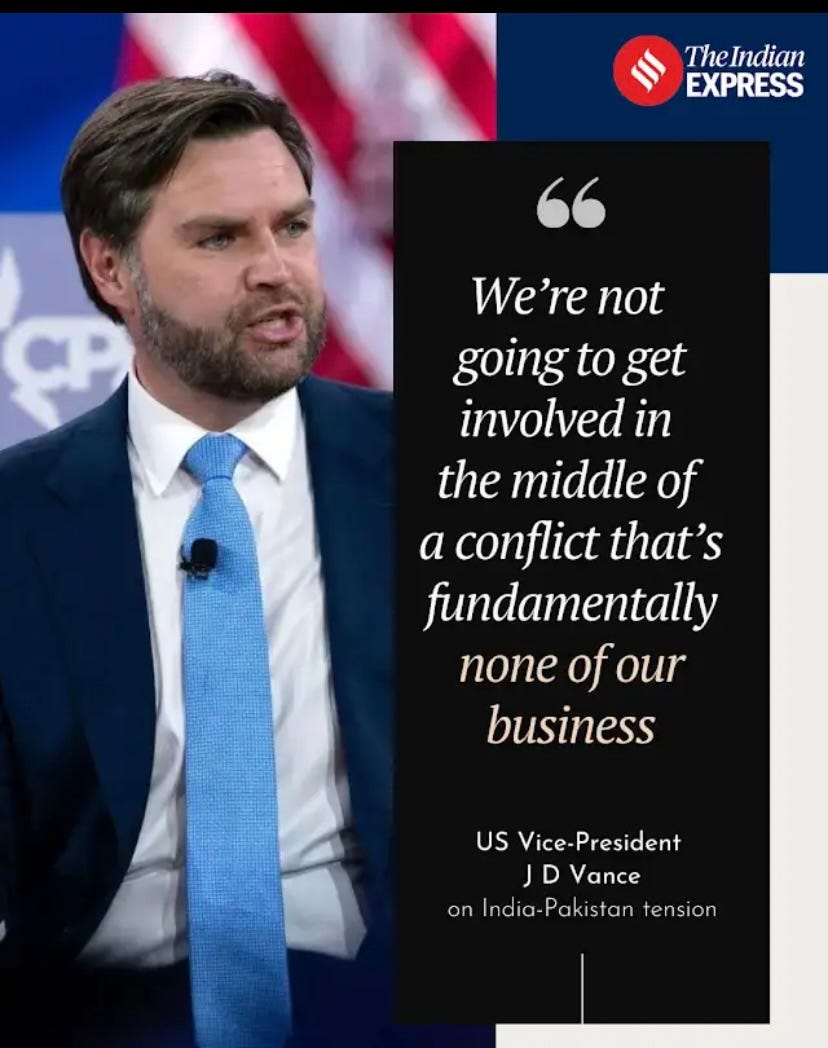
India is playing its cards carefully, using quiet diplomacy to navigate a volatile situation, while the U.S. keeps its distance for now.
Iran: The Unexpected Mediator
In a surprising twist, Iran positioned itself as a regional peacemaker. Iranian Foreign Minister Abbas Araghchi was the first high-level envoy to visit Islamabad and now in New Delhi during the crisis. Offering Tehran’s “good offices,” he pushed for regional peace and warned that escalation would threaten broader economic cooperation. Iran’s dual engagement with both capitals highlighted its ambitions to emerge as a stabilising force in West and South Asia, independent of Western or Chinese influence.
IMF Loans and Strategic Calculations
Amid the conflict, global financial dynamics intersected with security concerns. India lobbied the International Monetary Fund to halt disbursements to Pakistan, arguing that IMF funds could be diverted to militant groups. But in early May, the IMF approved a fresh \$1 billion payout and an additional \$1.4 billion loan to Islamabad.Pakistan hailed it as a diplomatic win. The U.S., backing the IMF decision, demonstrated a dual approach: supporting India’s counterterrorism efforts while propping up Pakistan economically to prevent state failure and further Chinese dependence.
China and Russia: Strategic Tightrope Walkers
China’s role has been particularly nuanced. Publicly, it called for peace and condemned terrorism. Privately, it continues to offer economic lifelines and diplomatic protection to Pakistan while managing a complex economic relationship with India. Russia, once a firm Indian ally, now walks a more neutral line due to growing ties with Pakistan and its reliance on both South Asian nations for arms sales and regional influence.
Geopolitics Reimagined
The Kashmir crisis now reflects a multipolar world order. The United States, China, Russia, and Iran are all involved, not out of altruism, but because each has strategic stakes. The U.S. views India as an Indo-Pacific ally, but Pakistan’s stability remains a counterterrorism and nuclear imperative. China sees Pakistan as a client state but wants continued trade with India. Russia wants arms deals and prestige. Iran seeks diplomatic clout.
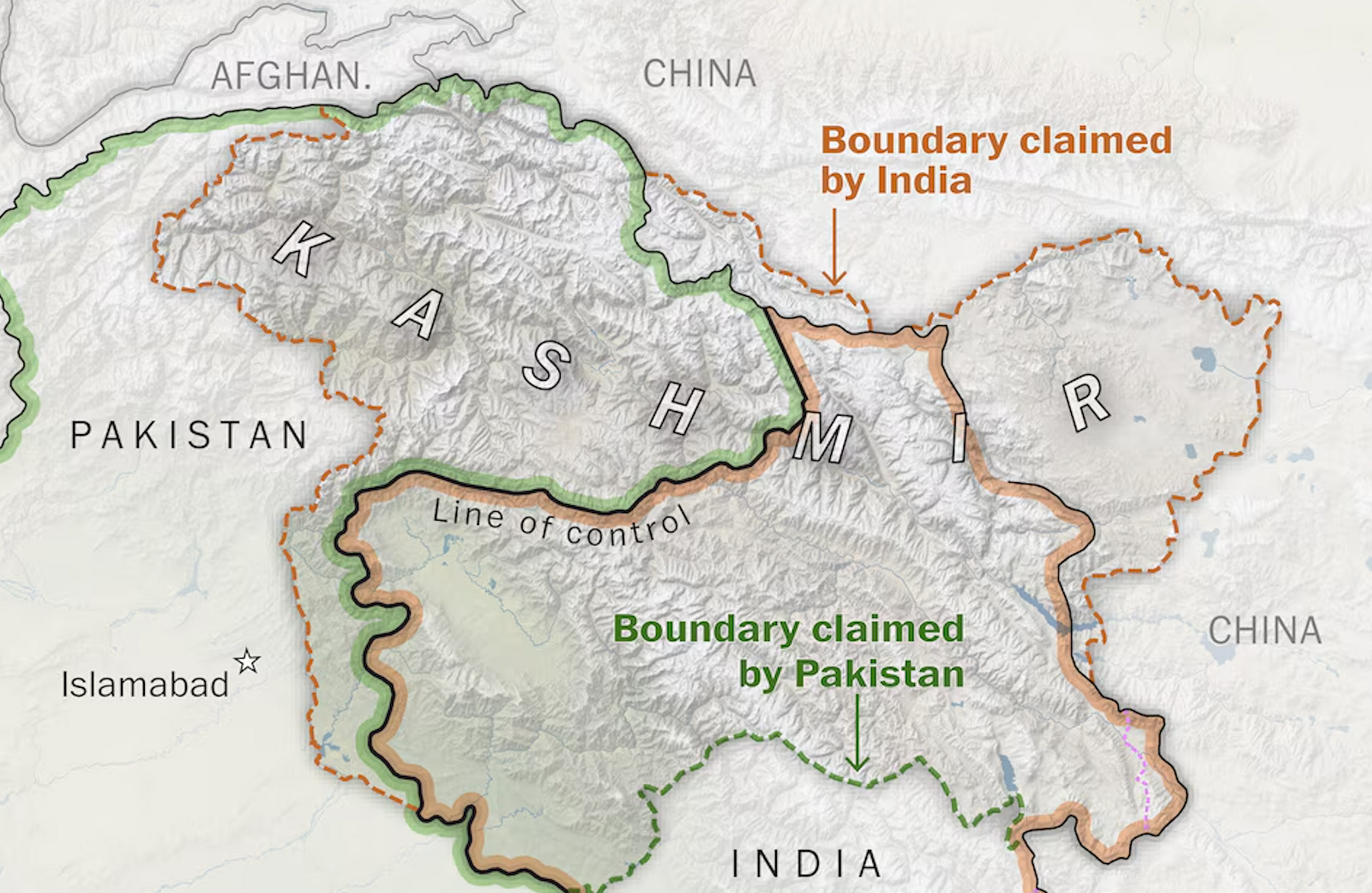
This is no longer a bilateral fight. Kashmir has become a node in the global power web. As both armies dig in, the risk of miscalculation remains. And yet, the flurry of diplomatic activity offers a slim hope: that dialogue, not devastation, will shape the region’s future.
In the end, the tragedy in Pahalgam may serve as a wake-up call. Not only to India and Pakistan, but to the world .
Let’s be real for a second — how do you even solve the Kashmir issue?
Should India give Kashmir to Pakistan? That’s never going to happen.
Should Pakistan give Kashmir to India? That’s just as unlikely.
Okay, so what if Kashmir becomes an independent country? Sounds fair, right? But again — both India and Pakistan will say no. Neither side wants to lose control, and both believe Kashmir belongs to them.
So what’s left?

Leave a comment